

Built to last.Managed to endure.
Steward keeps centuries-old homes breathing — repointing limestone, cycling slate roofs, and navigating preservation boards so owners never have to become experts themselves.
140+
Registered properties under active stewardship
38
States with National Register listings served
$2.4M
In historic tax credits navigated for clients
1847
Earliest property in our current portfolio
"These buildings are not investments that appreciate passively. They are organisms. They require fluent, season-by-season attention — and the expertise to know when a crack is cosmetic and when it is a sentence."
— Steward founding philosophy
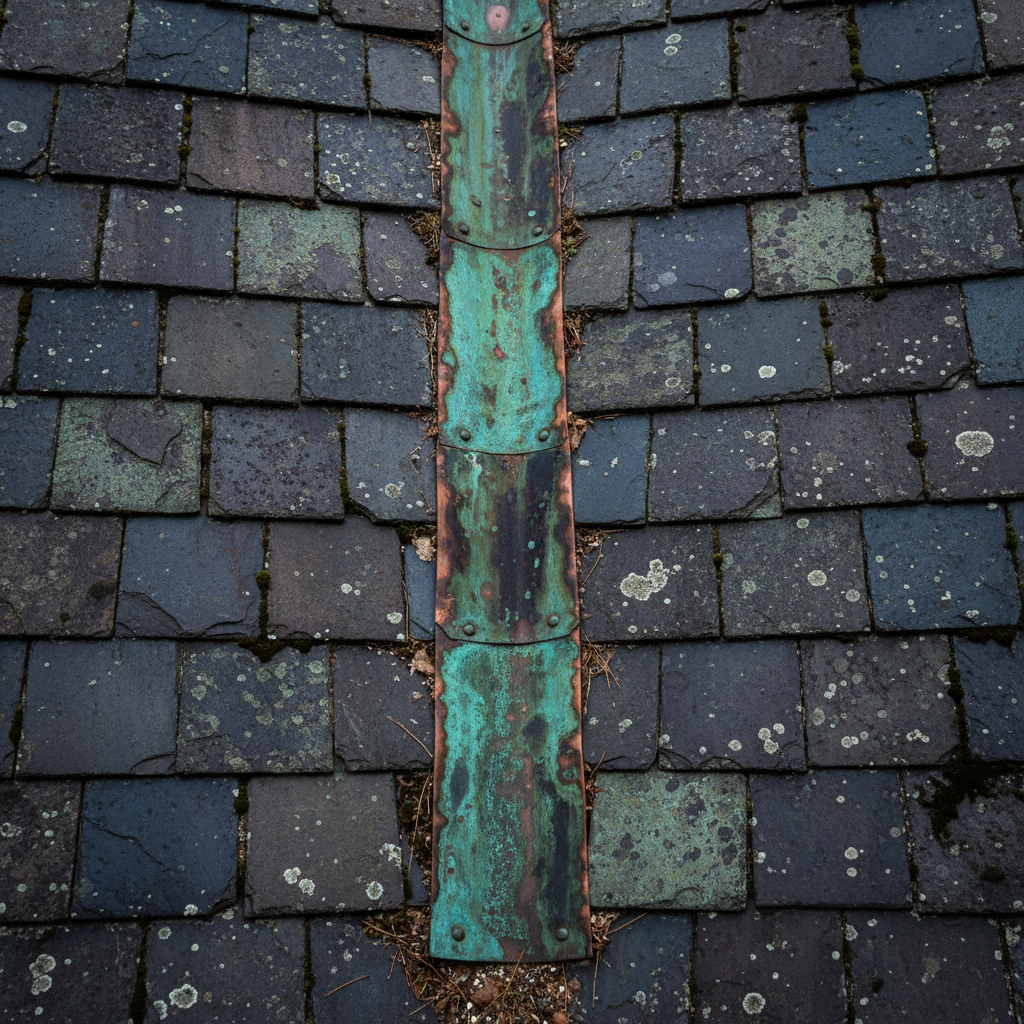
Valley Flashing
Copper valley replaced 2021. Next inspection: spring 2026. Watch for pine needle damming.
Mortar Joint
Hairline fracture detected. Repointing scheduled Q1 2026 before freeze-thaw cycle resumes.
Hover the brass indicators to read field annotations from a recent inspection.
The roof is where a house begins to die.
Or where it earns another century.
Slate roofs laid in 1890 were cut from quarries that no longer exist. When a field slate fails today, the replacement decision — salvage, compatible substitute, full resetting — carries consequences for the building's integrity that reverberate for decades.
Steward maintains documented slate inventories for every property we manage. We track tile condition by field, valley, hip, and ridge. We schedule repointing of chimney caps before water migrates to the flue. We specify copper over aluminum every time.
Our envelope inspections happen twice yearly — spring survey after freeze-thaw, fall survey before first frost. Owners receive a written report with photographic condition mapping within ten days of each visit.
Original plaster is not a problem to solve.
It is an asset to protect.
Three-coat lime plaster applied over hand-riven lath breathes differently than drywall. It regulates humidity, absorbs sound, and holds detail — egg-and-dart cornices, plaster medallions, coffered ceilings — that cannot be replicated at any price.
The enemy is water. A single season of roof neglect can saturate the lath keys and drop a ceiling that took craftsmen weeks to apply. Steward coordinates moisture monitoring, identifies the source before addressing the symptom, and works exclusively with lime plasterers who understand the original material.
We document every interior surface on intake — photographs, condition notes, known repairs — so that when work is needed, the contractor brief is already written.
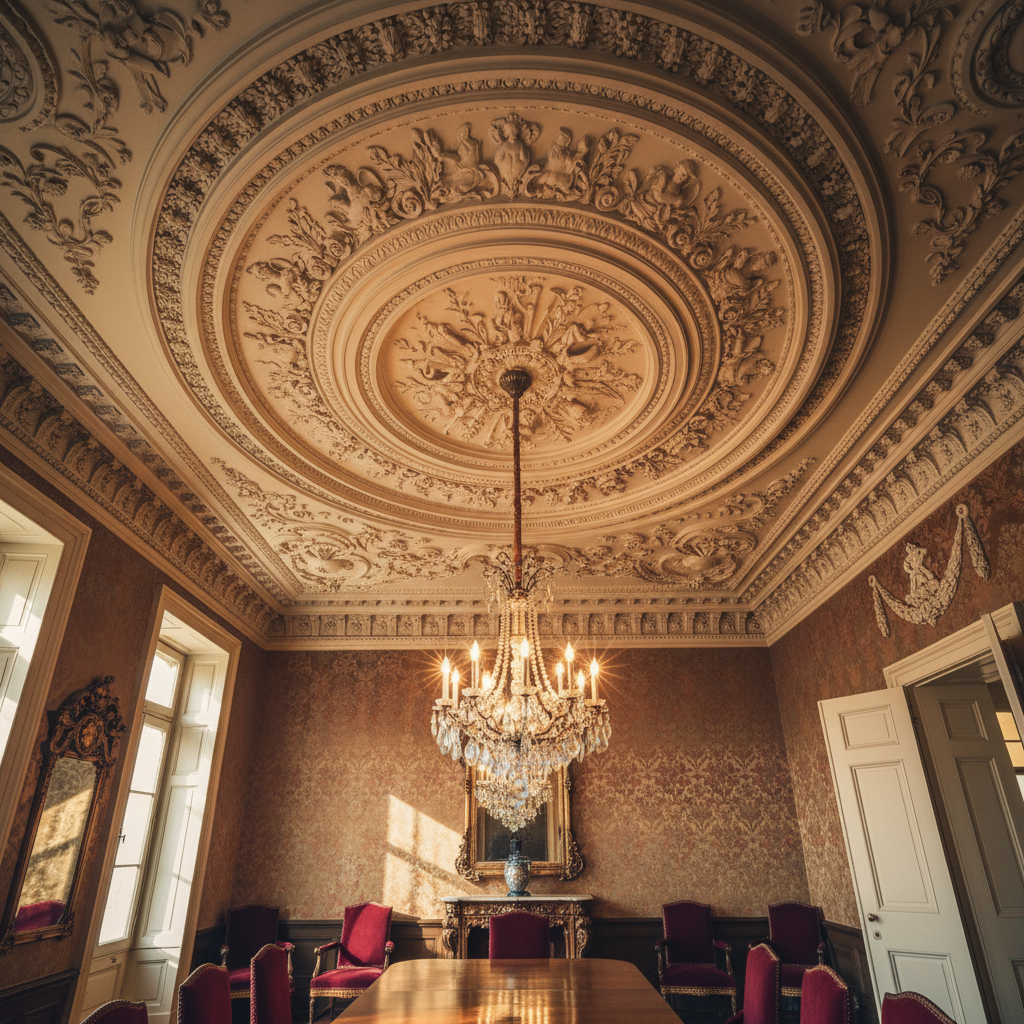
Medallion Condition
Original lime plaster, circa 1894. Surface stable. Annual humidity monitoring recommended.
Cornice Joint
Hairline crack at junction. Monitor through one heating season before intervention.
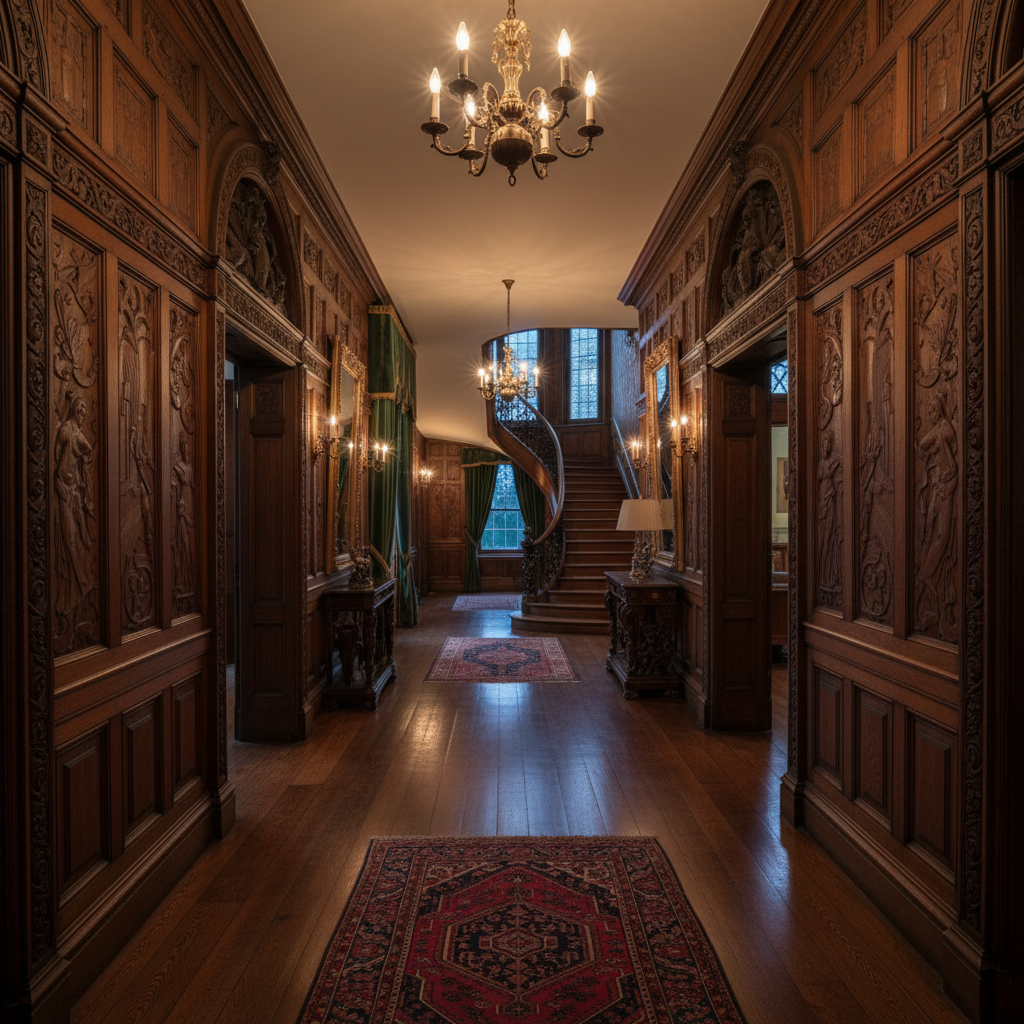
Duct Routing
New HVAC routed through original servant stair void. Zero structural modification required.
Modern systems, invisible inside original walls.
Comfort without compromise.
Historic homes were built before electricity, central heat, or pressurized water. Every mechanical system added since — HVAC, plumbing, electrical — has the potential to damage original fabric if routed carelessly or specified without preservation expertise.
Steward coordinates mechanical upgrades through preservation-experienced engineers who understand how to route new systems through existing voids, how to specify equipment that fits original mechanical rooms, and how to document work for future owners and preservation review boards.
We have managed complete mechanical replacements in occupied National Register properties without a single preservation board objection. The work disappears. The house remains.
Preservation boards are not obstacles.
They are the mechanism that protects your investment.
A National Register listing or local landmark designation comes with oversight — and with it, access to federal Historic Tax Credits worth 20% of qualified rehabilitation expenditures, and state credits that in some jurisdictions double that figure.
Steward has navigated preservation board approvals in 38 states. We prepare the documentation, attend the hearings, and write the project narratives that turn review boards from gatekeepers into partners. We have never lost an approval on a project we managed from the outset.
For owners undertaking rehabilitation, we coordinate the Part 1, Part 2, and Part 3 NPS certification process and work directly with your accountant and legal counsel to ensure the credits flow cleanly.

Approved Scope
Window replacement approved under Secretary of Standards. Matched 1:1 with original profiles.
Tax Credit Zone
Full exterior rehabilitation qualified for 20% federal HTC + 15% state credit in this jurisdiction.
What owners say after the first winter.
"Steward caught a failing copper valley at our 1891 Italianate before water reached the original plaster ceiling below. The repair cost $3,400. The ceiling it saved is irreplaceable."
Margaret Holloway-Crane
Estate Trustee
Holloway House, Hudson Valley, NY — NR Listed 1978
"Converting our Gilded Age property to a boutique inn without losing its integrity felt impossible. Steward navigated the preservation board, secured the tax credits, and the result exceeded what we imagined."
Theodore Vance
Principal, Vance Hospitality Group
The Pemberton, Newport, RI — Local Landmark
"I live in London. My family home is in Virginia. Steward does the seasonal walk-throughs, coordinates the contractors, and sends me a report I can actually read. That peace of mind has no price."
Annelise Fairfax-Morton
Absentee Owner
Fairfax Hall, Clarke County, VA — Contributing District
Schedule a Property Review
A Steward principal walks your property — in person or via documented survey — and returns a written assessment within ten days. No obligation. No boilerplate.
The Seasonal Preservation Calendar
Twelve months of maintenance checkpoints written for owners, not contractors. Know when to inspect your gutters, when to probe mortar joints, when to test your sump — before the season does it for you.
- —Spring envelope inspection checklist
- —Summer grounds and drainage tasks
- —Fall weatherproofing priorities
- —Winter interior monitoring protocol